
Category: Uncategorized
-

The Buddha Nature: Ground, Path, and Fruition
Every being possesses an inherent state of peace and happiness, known as the Buddha nature. This essence is empty, cognizant, and free from fixations, representing natural wisdom with enlightened qualities. However, due to being entangled in the delusions of samsara, most beings remain unaware of this perfect essence within them.
The teachings of the Buddha provide guidance to reconnect with the inner Buddha and attain enlightenment. This is the path. To embark on this journey, we must cultivate the precious bodhicitta from the very beginning. As we gradually let go of fixations, the Buddha nature within us begins to manifest fully. When we are completely free from fixations, we attain enlightenment and become Buddhas. This is the fruition.
An analogy can be drawn between sentient beings and the Buddha nature during the path. The Buddha nature is like the sun, while ego-clinging, delusions, attachments, and obscurations are akin to clouds covering the sun. As the clouds dissipate, the brilliance of the sun naturally shines forth. Similarly, the Buddha nature is always present, regardless of its obscurity. However, in the experience of ordinary beings, there is a sense of disconnection from the Buddha nature. Practitioners, on the other hand, may intermittently touch upon or lose sight of it, alternating between delusion and glimpses of enlightenment.
Ultimately, uncovering the Buddha nature requires releasing fixations. Fixation solidifies the clouds of obscurity, while letting go reveals the radiant sun of Buddha nature.
Since every sentient being possesses the Buddha nature within, the aspiration to free all beings from suffering and establish them in perfect enlightenment aligns with their inherent potential. If beings lacked the Buddha nature, bodhicitta would be empty wishful thinking without any basis.
Initially, the development of bodhicitta is relative. As we begin to glimpse our primordially pure Buddha nature, we gradually realize absolute bodhicitta. When the Buddha nature is fully unveiled, we achieve perfect enlightenment, reaching the fruition.
The concepts of samsara, nirvana, and the path to enlightenment are all understood within the framework of ground, path, and fruition. The Buddha nature represents the ground or basis, which is the primordial Buddha, embodying qualities and devoid of defects. Unaware of this essence, beings live in delusion. The Buddha’s teachings illuminate the path, showing beings how to reconnect with their Buddha nature. Once the Buddha nature is fully realized, one becomes a fully awakened Buddha, signifying the fruition.
The Bodhisattva-caryavatara serves as a guide for following the path to enlightenment. It offers instructions on developing bodhicitta, practicing the six transcendental perfections, realizing the view of Buddha nature, and allowing this view to mature into complete enlightenment.
Buddha nature, also referred to as the “enlightened essence,” encompasses various names such as “root of Buddha,” “pure essence,” or “heart-drop of Buddha.” It signifies the genuine Buddha within all sentient beings, indistinguishable from their own mind’s essence.
This inner Buddha represents the ground. When fully realized, it becomes the fruition. There is no difference between the ground and the fruition. The ground is the genuine Buddha, complete with qualities and devoid of defects. However, due to delusion, we remain unaware of this inner Buddha and need to embark on the path to dispel our delusion. The Buddha’s teachings provide the perfect remedy to remove delusion and reconnect us with our true nature.
On the path, we learn methods to eliminate obscurations and accumulate merit and wisdom. The ninth chapter of the Bodhisattva-caryavatara teaches us to recognize our Buddha nature and
-

The Essence of Buddhist Teachings: The Two Accumulations of Merit and Wisdom
In Buddhism, the ultimate goal is to break free from fixation and attachment, which keep us bound to the cycle of samsara. Our mind has the power to generate thoughts that can loosen our grip on samsara, known as “conceptual merit.” Accumulating conceptual merit is crucial to transform negative patterns into virtuous ones and loosen our habitual fixation on negativity. As fixation dissipates, wisdom begins to emerge, revealing our Buddha nature—the essence of enlightenment.
To attain enlightenment, we must gather two accumulations: conceptual merit and non-conceptual wisdom. Relative bodhicitta, the altruistic intention, is cultivated through the accumulation of conceptual merit. The Bodhisattva-caryavatara provides various methods to generate conceptual merit. Once relative bodhicitta is firmly established, it becomes the foundation for the arising of absolute bodhicitta, non-conceptual wisdom.
Non-conceptual wisdom transcends thoughts and directly recognizes Buddha nature, egolessness, and profound emptiness. It cuts through all fixation on samsara. While the practice of relative bodhicitta enhances the accumulation of merit, the practice of absolute bodhicitta enhances the accumulation of wisdom.
In addition to the two accumulations, purification of the two obscurations is essential. These obscurations include afflictions and cognitive obstacles. Perfecting the two accumulations and purifying the two obscurations are crucial for attaining enlightenment.
The two accumulations serve as remedies for the obscurations. Conceptual merit addresses the gross afflictions, while non-conceptual wisdom deals with the subtle levels of afflictions and cognitive obscurations.
Practicing the first five perfections accumulates merit, while the perfection of wisdom accumulates wisdom. When a bodhisattva maintains the recognition of non-conceptual wisdom while practicing the other perfections, both accumulations are gathered simultaneously, known as the unity of merit and wisdom. Merit enhances the practice of wisdom, and wisdom enhances the practice of merit.
The accumulation of merit alone leads to rebirth in higher realms and favorable conditions for practicing Dharma. With great merit, one can recognize transcendental knowledge. Buddha Sakyamuni accumulated merit for aeons before realizing wisdom and achieving perfect enlightenment. Recognizing the connection between merit and wisdom is essential—great merit allows wisdom to arise.
The Vajrayana teachings emphasize that the ultimate co-emergent wisdom can only be attained through practices that gather accumulations, purify obscurations, and receive the blessings of the guru. These three aspects occur simultaneously and lead to transformative change in the practitioner’s mind.
Beginners should start by accumulating conceptual merit through practices such as taking refuge, developing relative bodhicitta, visualization, and the seven branches. Simultaneously, they should engage in the accumulation of wisdom by receiving teachings on recognizing Buddha nature from a qualified master. Though beginners may still be caught in dualistic thinking, progress toward wisdom practice can be made.
Wisdom can only be recognized by transcendental intelligence, not ordinary conceptual thinking. Ordinary thoughts rely on a subject-object dichotomy, while wisdom surpasses such limitations. Embracing the relative nature of intellect is a step toward understanding the ultimate truth.
-

Karma and the Cycle of Samsara: Understanding Cause and Effect
Throughout time, sentient beings have been cycling in the vast ocean of samsara, driven by a multitude of thoughts, hopes, and fears. Despite our diversity, we all share a common desire for happiness. Our current circumstances are shaped by our past actions, our karma. The experiences of happiness, suffering, and neutral states that we encounter are the fruits of our accumulated causes.
While our inherent aspiration is happiness, we often remain oblivious to the cause of happiness, which lies in the accumulation of virtuous deeds. Due to our habitual tendencies, we find ourselves inclined towards non-virtuous actions, while virtuous actions seem arduous and demanding.
Karma refers to the mind’s ability to initiate virtuous, non-virtuous, or neutral thoughts, emotions, and deeds. Merit, on the other hand, empowers us to avoid disharmony, suffering, obstacles, and illnesses. It is the mind’s capacity to create harmonious conditions, requiring active cultivation and accumulation by each individual.
The profound intricacies of karma can only be comprehended by a fully enlightened Buddha. A Buddha possesses clear insight into the cause-and-effect relationship of actions, spanning countless cycles of rebirth. Based on this profound understanding, a Buddha imparts teachings on conduct, such as the ten virtuous actions, guiding us on the actions to adopt and those to avoid. To attain happiness in this life and beyond, we must practice the ten virtuous actions. Persisting in the ten non-virtuous actions, despite our yearning for happiness, contradicts our aspirations and leads to wretched states of existence.
Actions that foster harmony and positive conditions are considered virtuous or wholesome, while those causing disharmony and negative conditions are termed non-virtuous or unwholesome. Happiness and its causes are rooted in positivity and virtue, while suffering and its causes stem from negativity and non-virtue. Both virtue and non-virtue, as well as merit and de-merit, depend on the mind and are products of the mind.
The law of cause and effect, known as karma, dictates that virtuous actions lead to happiness, while non-virtuous actions result in suffering. Even before embarking on the Buddhist path and seeking refuge in the Buddha, the Dharma, and the Sangha, one must grasp and accept the law of karma. Without this understanding and adherence to the ethical principles of a bodhisattva, the journey towards enlightenment remains out of reach.
You are the inheritor of your past karma and actively shaping your future karma in the present moment. Buddhist practitioners bear full responsibility for their own karma, recognizing that they have crafted both their suffering and happiness. They understand that liberation from the suffering of samsara depends entirely on their own efforts.
A Buddhist acknowledges the law of cause and effect, firmly believing in the consequences, positive or negative, that arise from their actions. Following the ten virtuous actions and embodying the conduct of a bodhisattva are essential for genuine Dharma practice. Any notion that harm can be inflicted upon others while progressing towards enlightenment is merely a delusion.
-

The Six Transcendental Perfections
Buddha Sakyamuni dedicated countless aeons to cultivating bodhicitta and practicing the six transcendental perfections, leading him to perfect enlightenment. These perfections, encompassing generosity, discipline, patience, diligence, meditation, and knowledge, are at the core of the bodhisattva’s path. Let’s explore each perfection and its transformative power.
Generosity: By developing a generous mindset, we cut through attachments and give without clinging. It goes beyond mere material offerings and involves releasing what we cherish or genuinely need. True transcendental generosity arises when it is accompanied by non-conceptual wisdom, going beyond conventional giving.
Discipline: Discipline involves letting go of fixation on non-virtue, refraining from negative thoughts and actions. It is about resolving not to indulge in harmful behaviors of body, speech, and mind. By releasing negativity and embracing virtuous conduct, we cultivate transcendental discipline.
Patience: Practicing patience means not acting upon afflictions and negative impulses that arise within us. It is the release of fixation on mental turmoil, such as anger, greed, and jealousy. Transcendental patience arises when it is grounded in the recognition of non-conceptual wisdom.
Diligence: Diligence is joyously engaging in virtuous actions, wholeheartedly practicing the Dharma. It requires overcoming laziness and practicing with a happy and inspired mind. Transcendental diligence arises when it is fueled by non-conceptual wisdom and performed with enthusiasm.
Meditation: Meditation is the practice of letting go of distractions and attaining an undistracted and centered state of mind. It involves cultivating both calm abiding and clear insight. With the recognition of non-conceptual wisdom, meditation becomes transcendental, allowing us to deepen our understanding of the truth.
Knowledge: The bodhisattva possesses the wisdom to maintain recognition of the Buddha nature while practicing the perfections. This knowledge is gained through studying, contemplating, and meditating on the teachings of the Buddha. It is the ability to apply this wisdom to the other perfections, transcending ordinary knowledge and recognizing egolessness.
Transcendental knowledge goes beyond sensory perception, recognizing profound emptiness and non-conceptual wisdom. It is the knowledge that liberates us from ego-clinging and ignorance. As we progress on the bodhisattva path, this knowledge becomes more profound, leading us toward genuine transcendence.
By integrating the practice of these six transcendental perfections with the recognition of non-conceptual wisdom, we cultivate enlightenment in our daily lives. Each perfection brings us closer to the state of transcendence, where ego-clinging and ignorance are transcended. Let us embrace these perfections and embark on the path of awakening.
-
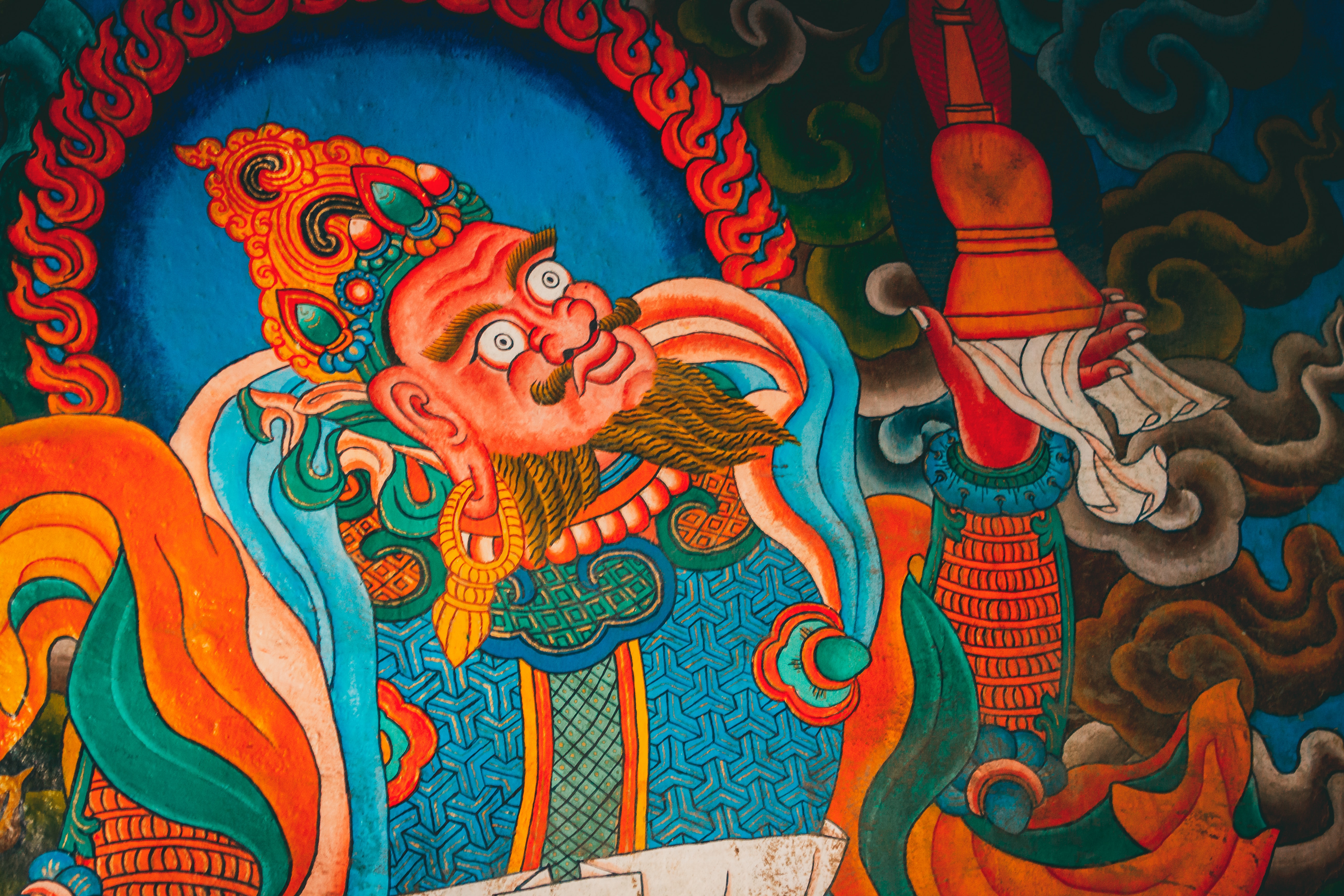
Walking Mindfully: Embracing Phenomena in the Footsteps of Buddha
Finding Harmony with Phenomena: In life, we often encounter things that we may dislike or find challenging. Take air pollution, for example. Instead of reacting with anger or frustration, it is important to approach these phenomena with understanding. By accepting and adapting to the circumstances, such as wearing masks or making lifestyle changes, we can find greater harmony and inner peace.
The Transformative Power of Walking: Walking has a remarkable ability to transform us. Before a walk, we may feel heavy and uninspired, but after a refreshing stroll, we often experience a renewed sense of energy and vitality. Regular walking can positively impact our physical, mental, and emotional well-being.
Emulating Buddha’s Walking Practice: Buddha Shakyamuni, the historical Buddha, was known for his love of walking. He covered long distances daily, often accompanied by his disciples. Despite the challenges, they walked without complaint, searching for suitable places to teach. Emulating Buddha’s walking practice can be a profound spiritual practice in our own lives.
Cultivating Mindful Awareness of the Environment: Walking mindfully allows us to develop a heightened awareness of our surroundings. By paying attention to our environment, we can avoid becoming overly attached or fixated on its negative aspects. Instead, we can adopt a balanced perspective and appreciate the beauty and opportunities it offers.
Reducing Anxiety and Focusing on Solutions: The purpose of these teachings is to alleviate anxiety and fear by shifting our focus from dwelling on problems to seeking solutions. When faced with challenges, we can find practical and creative ways to address them. For example, in cold and dark situations, we can dress warmly and visualize ourselves rising above the difficulties.
Recognizing the Importance of Lineage Masters in Buddhism: Lineage masters play a crucial role in Buddhism. With a lineage dating back 2,900 years to Buddha’s teachings, this time-tested tradition offers profound benefits. In contrast to new religions or cults, Buddhism emphasizes reducing negative thinking and nurturing positive thinking. By connecting with lineage masters, we gain access to a lineage that has consistently produced positive results, guiding us from suffering to liberation.
In conclusion, embracing phenomena and walking mindfully can bring about profound personal transformation. By finding harmony with our surroundings, practicing intentional and aware walking, following in the footsteps of Buddha’s walking practice, cultivating mindful awareness of the environment, reducing anxiety through creative solutions, and recognizing the significance of lineage masters, we can enhance our spiritual journey and experience greater peace and fulfillment in life. Let us integrate the teachings of Buddha into our daily lives, walking the path of wisdom and compassion.